

Share This Article
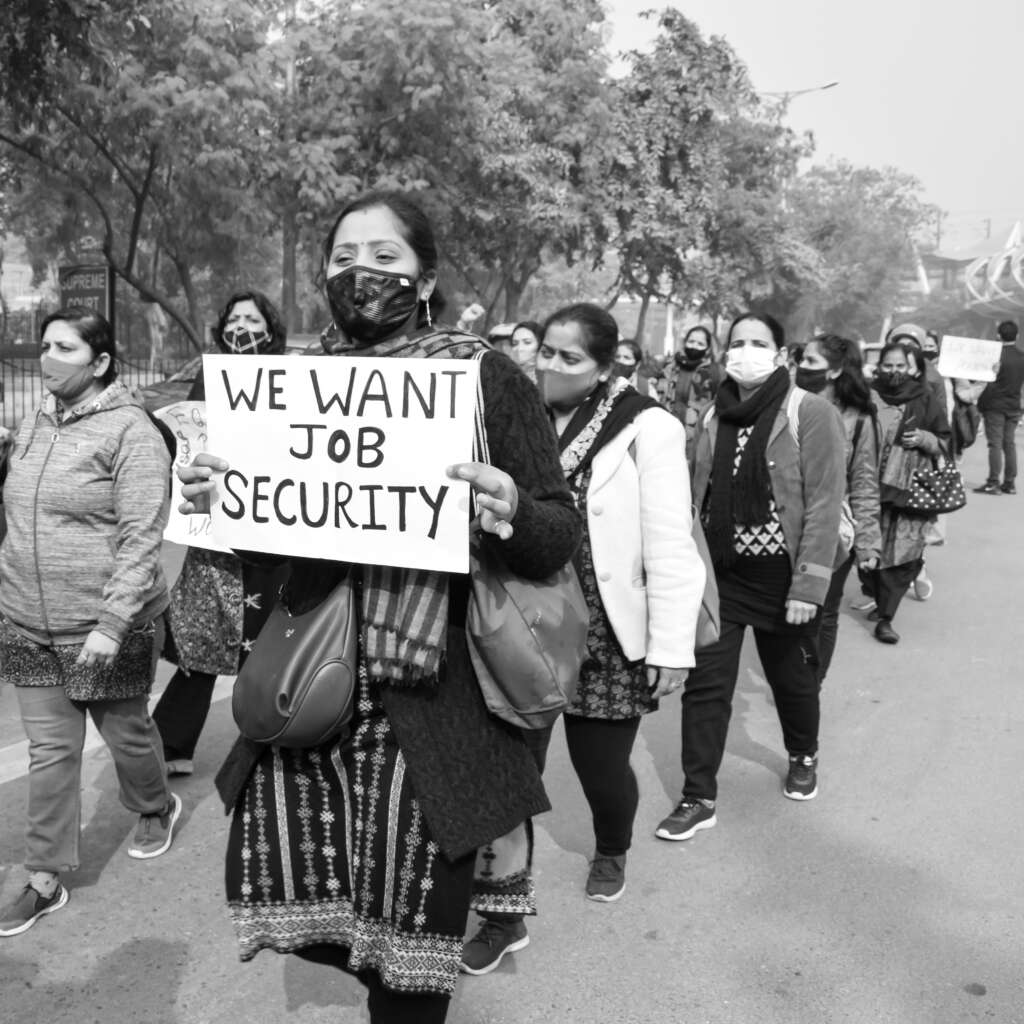
What does feminism really stand for and how did a movement for equality become one of the most misunderstood words of our time?
Ask ten people what feminism means, and you might get ten different answers. For some, it is the belief that women deserve the same rights, opportunities and freedom as men. For others, it has come to mean putting women first, rejecting traditional relationships or, in its most extreme interpretation, viewing men as the problem.
Scroll through social media, and the conversation becomes even more confusing. A woman choosing her career over marriage is celebrated as a feminist. Another choosing to be a homemaker is questioned for giving up her independence. A man expressing a traditional view is labelled regressive, while a woman expressing one is sometimes told she has misunderstood her own liberation.
At some point, a movement that began by questioning why women had fewer choices seems to have become entangled in debates about which choices women should make. But perhaps the problem is not feminism itself. Perhaps it is that we have become so occupied with debating the word that we have stopped examining what it actually means.
To understand feminism today, we need to go back to where it began, look at the struggles that shaped it, and ask a more fundamental question: what does equality look like when it moves beyond a slogan and becomes part of everyday life?
It began with a rather simple question
Imagine living in a society where your ability to vote, own property, receive an education or make important decisions about your life could be restricted simply because you were a woman. For much of history, this was not a hypothetical situation. Women’s legal rights and social freedoms varied considerably across societies, but many faced restrictions that men did not face in the same way.
The early women’s rights movement emerged from the challenge to these restrictions. Its central concern was not that women were better than men. It was that women were being denied opportunities and freedoms that were treated as ordinary entitlements for men.
One of the earliest influential voices in this conversation was Mary Wollstonecraft, whose 1792 work, A Vindication of the Rights of Woman, challenged the belief that women were naturally less capable of reason. She argued that women appeared less intellectually capable partly because they were denied the kind of education that encouraged independent thought. Her argument was significant because it questioned the assumption that women’s social position was simply a reflection of their natural abilities.
What if women were not less capable, but had been given fewer opportunities to demonstrate their capabilities? That question remains relevant even today.
The organised women’s rights movement gained momentum during the nineteenth century. At the Seneca Falls Convention in the United States in 1848, activists publicly challenged women’s exclusion from political participation and demanded greater recognition of their rights.
Over time, campaigns for voting rights, education, property ownership and access to professions helped change the legal and social position of women in many parts of the world. These changes did not happen overnight, nor were they achieved by a single group of women. They emerged through decades of activism, debate and resistance, with different countries following different paths.
But the underlying concern remained consistent: why should being born a woman determine the opportunities available to you?
That is an important place to begin when discussing feminism. Before it became a label people embraced or rejected, it was a challenge to the idea that women’s lives should be governed by limitations imposed on them because of their gender.
The movement evolved because women’s lives did
As women gained certain legal rights, it became clear that legal equality alone could not resolve every form of inequality. A woman might have the right to work but still be expected to give up her career after marriage. She might be qualified for a leadership position but encounter assumptions about whether she could handle authority. She might be financially independent yet remain responsible for the overwhelming majority of domestic work.
The question was no longer simply whether women were allowed to participate. It was whether they had a genuine opportunity to participate on fair terms. This became an important part of feminist thought during the movements of the 1960s and 1970s, which brought greater attention to employment discrimination, reproductive rights, domestic responsibilities and violence against women.
Later, feminist scholars began challenging another assumption: that all women experienced inequality in the same way.
A woman from a privileged background could face gender discrimination, but her experience would not necessarily resemble that of a woman struggling for access to education, financial security or basic resources. In India, questions of caste, class, rural access and social expectations have made this distinction particularly important. Legal scholar Kimberlé Crenshaw’s work on intersectionality helped explain how different forms of disadvantage can overlap and shape a person’s experience.
This history matters because feminism has never been a completely uniform movement. Its thinkers and activists have disagreed on many issues, and the movement has had to confront its own exclusions.
Yet its evolution also tells us something important: equality is not a finished achievement. As circumstances change, the questions we ask about freedom and fairness change too.
So, what does feminism actually mean?
At its core, feminism is concerned with challenging gender-based inequality and the restrictions that prevent people from exercising their rights, abilities and choices freely. That sounds straightforward, but it has implications that are often overlooked.
Feminism does not require us to believe that women and men are identical in every respect. It asks whether differences between them are being used to justify unfair treatment, unequal opportunities or unnecessary restrictions. It does not require every woman to be ambitious in the same way, pursue the same career or want the same kind of relationship. It asks whether she has the freedom to make those decisions without being treated as less worthy because of them. And it does not require women to dislike men. It asks us to examine the attitudes, practices and institutions that disadvantage people because of gender.
The distinction is worth making because equality is sometimes confused with superiority. Wanting women to have equal opportunities is not the same as believing women are inherently better than men. Challenging discrimination is not the same as assuming that every man is discriminatory. Recognising the disadvantages women face does not require dismissing the difficulties men experience. These ideas can coexist.
A woman can be exceptionally successful without believing that her success makes her superior to other women or men. A man can support gender equality without feeling that his identity or dignity is under threat. Both can recognise that certain social expectations have historically restricted women’s choices while also questioning rigid expectations placed on men.
The point is not to decide which gender deserves more respect. It is to understand why respect, opportunity and freedom should be distributed unfairly in the first place.
The Indian woman and the meaning of choice
In India, the conversation around feminism has its own history and complexities.
Women such as Savitribai Phule played a pioneering role in girls’ education, challenging social barriers at a time when educating women was widely resisted in many communities. Pandita Ramabai questioned restrictions on women’s education and independence. Women’s participation in the freedom movement also challenged the idea that public and political life belonged primarily to men. Since independence, constitutional guarantees of equality have provided an important foundation for women’s rights. Yet legal protections and changing social attitudes have not eliminated every barrier women encounter in their personal, professional and public lives.
The contemporary Indian woman may be highly educated and professionally accomplished while still navigating expectations about marriage, motherhood, family responsibilities and how she should conduct herself.
Consider two women. One wants to build a career, become financially independent and delay marriage until she feels ready. The other wants to marry young, raise a family and devote much of her time to her home. Why should one automatically be considered more liberated than the other?
The answer should not depend on whether their lives look alike. If the first woman is discouraged from pursuing her career because her family believes professional ambition is inappropriate for women, there is a question of freedom worth examining. If the second is told that her decision to prioritise her family makes her unintelligent or unambitious, her choice is being unfairly judged too.
Of course, choices do not exist in a vacuum. A woman may appear to choose a particular path because she has never been given a realistic alternative. Financial dependence, social pressure, a lack of childcare or fear of disapproval can influence what seems possible. This is why the conversation needs more nuance than simply saying, “It is her choice.”
We should respect individual choices while remaining willing to examine the circumstances in which they are made. A woman who chooses to stay at home should not have to prove that she is independent by returning to work. A woman who chooses not to marry should not have to defend her decision to relatives who believe marriage is essential to a woman’s fulfilment.
The point of women’s freedom is not to replace one set of expectations with another. It is to allow women to decide what a meaningful life looks like for themselves.
What research tells us about the work that remains
The discussion about feminism is often dominated by opinions about how far society has progressed. The World Bank’s Women, Business and the Law project examines how laws and regulations affect women’s economic opportunities. Its work highlights an important distinction: having the formal right to participate in economic life does not necessarily mean that all the conditions needed to exercise that right are in place.
The International Labour Organization has also documented the significant contribution of unpaid care and domestic work, much of which is performed by women worldwide. Cooking, caring for children, looking after older family members and managing a household are essential forms of work. Yet they often go unpaid and may limit the time available for employment, professional development and rest.
The issue is not whether domestic work is valuable. It is. The question is whether the responsibility for it is distributed fairly, whether it is recognised and whether people have meaningful choices about how they divide their time. A woman who works full-time and then carries the entire responsibility for her household may face a very different set of pressures from a partner who shares those responsibilities. Similarly, a man who wants to take a more active role in raising his children may encounter expectations that caregiving is primarily a woman’s responsibility.
Examining these patterns does not mean that every family must adopt the same arrangement. It means that the arrangement should be considered in light of the people involved, their preferences and their circumstances, rather than dictated by an assumption about what women or men are naturally supposed to do.
Research cannot answer every philosophical question about feminism. But it can help us identify the practical barriers that shape people’s lives. And that is where the conversation becomes meaningful: not in deciding who has the better argument online, but in understanding what prevents people from exercising genuine freedom.
When feminism becomes a social media debate
There is something ironic about the way feminism is discussed online. A movement that has spent generations challenging stereotypes can itself become the subject of new stereotypes.
A woman who expresses frustration with men may be treated as representative of feminism as a whole. A man who criticises a particular feminist argument may be accused of opposing women’s rights altogether. A personal disagreement can quickly become a debate about the moral character of an entire gender. Social media makes these disagreements visible, but visibility is not the same as understanding.
Complex arguments are often reduced to short clips, provocative captions and statements designed to attract attention. The most extreme voices can become the most memorable, leaving the impression that they represent everyone who identifies with a particular movement.
They do not necessarily do so. There is a difference between advocating for women and claiming that women are always right. There is a difference between holding someone accountable for harmful behaviour and condemning an entire gender. And there is a difference between challenging traditional expectations and assuming that anyone who chooses a traditional life must be uneducated or oppressed. These distinctions should not be difficult to make, yet they are frequently lost in the conversation.
It is also worth acknowledging that not every criticism of feminism is an attack on women’s rights. Feminist arguments, policies and strategies can be questioned, just like any other set of ideas. A serious discussion should allow room for disagreement without relying on caricatures of either side.
The problem begins when we stop examining what someone is actually saying and start deciding what they must believe simply because of the label they use. Feminism deserves more than that. So does the conversation about gender equality.
Does feminism leave room for men?
It should, because gender equality is not a project that requires men to be treated as adversaries.
Men, too, can be restricted by rigid expectations about masculinity. They may feel pressured to be the sole financial provider, suppress vulnerability or avoid caregiving responsibilities for fear of being judged. These pressures are not identical to the barriers women face and recognising them should not become a reason to minimise women’s experiences. But they demonstrate why rigid gender roles deserve examination.
bell hooks, in her book Feminism Is for Everybody, describes feminism as a movement to end sexism, sexist exploitation and oppression. Her framing places the emphasis on changing harmful beliefs and practices rather than turning equality into a competition between men and women.
A man who respects his partner’s professional ambitions, shares domestic responsibilities and challenges discriminatory attitudes can contribute to a more equal society. A woman can do the same by questioning stereotypes about men and recognising that they, too, should be allowed to express vulnerability and make unconventional choices. Neither needs to believe that the other gender is inferior.
Of course, supporting equality does not mean that everyone will agree on every issue. People can disagree about relationships, family arrangements, workplace policies and the best ways to address discrimination. But disagreement becomes more constructive when the discussion focuses on the issue itself rather than assuming that one gender is automatically right and the other automatically wrong.
Equality does not require hostility. It requires a willingness to examine our assumptions, including the ones that are most familiar to us.
Perhaps we have been asking the wrong question
Much of the modern conversation revolves around whether a particular behaviour is feminist, whether a particular woman is empowered, or whether a particular man is progressive enough. These questions can be interesting but they can also distract us from the larger principle.
Instead of asking whether a woman is making the right choice, perhaps we should ask whether she has the freedom to make it. Instead of asking whether a man is threatened by feminism, perhaps we should examine what equality would mean for the relationship, workplace or situation being discussed. And instead of judging an entire movement by the most provocative opinions expressed in its name, perhaps we should return to the ideas and evidence that shaped it.
Feminism has never been a single, perfectly consistent philosophy. It has its disagreements, limitations and internal debates. Not every argument made in its name deserves unquestioning acceptance. But neither should the movement be reduced to the assumption that women want to be superior to men. Its history is far more complicated and its central questions remain worth asking.
Who gets to pursue an education? Whose ambitions are taken seriously? Who is expected to sacrifice their opportunities for the family? Whose work is recognised? Who can leave an unhealthy relationship without facing economic insecurity? And why should any of these questions be answered differently simply because someone is a woman or a man? These are not abstract questions. They shape ordinary decisions about work, relationships, family and the kind of life a person believes they are allowed to have.
A woman should not have to reject marriage to prove her independence. She should not have to abandon her career to prove her devotion to her family. A man should not have to suppress his emotions to prove his strength. And neither should have to diminish the other to feel secure in their own identity. Feminism, at its most fundamental, is not about deciding who is better. It is about questioning why being a woman or a man should determine the opportunities, expectations and freedoms available to a person in the first place.
Perhaps the real measure of equality is not whether women are encouraged to live like men, but whether they are free to live as themselves without being made to feel that their gender has already decided who they can become.
- Public Spaces Are Not for Women? The Question India Still Hasn’t Answered
- Feminism, Reconsidered: Somewhere Between What It Was and What It Has Become
- Good Girl Syndrome: Why Women Are Praised for Adjusting and How to Begin Choosing for Yourself
- The Power of Words: How Language Shapes the Way We See Women
- The People Pleasing Trap: How ‘Being Nice’ Can Be Self-Betrayal